


Decluttering Your Home: Creating Space for the Life You Actually Want

Decluttering isn’t just about “getting organized.” It’s about changing how your home feels.
Because when your space is full—physically, mentally, energetically—it’s hard to think clearly. Hard to rest. Hard to feel like yourself.
And most people don’t realize…
It’s not just the stuff.
It’s what the stuff is doing to you.
If your home has been feeling heavy, overwhelming, or like it’s constantly asking something from you—this is your invitation to shift that. Not through pressure. Not through perfection.
But through intention
Why Decluttering Matters
Decluttering isn’t about having less for the sake of it. It’s about creating a space that actually supports you.
When your home is aligned, you’ll start to notice:
More mental clarity → you’re not constantly processing your environment
Less stress → your space stops demanding your attention
More ease in your day → things are where you expect them to be
More room for creativity and connection → your energy isn’t tied up in “stuff”
Your home either drains you… or it holds you.
Decluttering is how you shift that..
Start Here: The Mindset Shift That Changes Everything
Before you touch a single drawer or closet—this part matters most.
Instead of asking:“How do I get rid of all this?”
Try asking:“What kind of space do I want to live in?”
Let yourself picture it.
How does it feel to walk into your home?
What feels easy?
What’s no longer there?
This becomes your anchor.
Because decluttering isn’t a one-time event—it’s a relationship with your space.
And like any relationship, it works better when it’s intentional.
Simple, Supportive Decluttering Strategies
No pressure. No extremes. Just approaches that actually work in real life.
1. The “Make a Decision Once” Method
Create several piles or use bins to go through your belongings.
As you go through items, decide:
Keep
Let go (donate/sell)
Trash
The key isn’t the categories. It’s that you decide once—and move on.
Overthinking is what keeps people stuck.
2. The “Would I Choose This Again?” Filter
Instead of asking if you might need it someday…
Ask:
“If I saw this in a store today, would I bring it home?”
If the answer is no—that tells you everything.
3. One Space at a Time (Because Overwhelm Helps No One)
You don’t need to do your whole house in a weekend.
In fact—that’s usually what leads to burnout.
Pick one small area:
A drawer
A shelf
One corner of a room
Finish it.
Let yourself feel that completion.
That’s how momentum builds.
4. Create Gentle Rhythms Instead of Big Purges
Decluttering doesn’t have to be intense to be effective.
Try:
Removing a few items each day
Resetting a space at the end of the week
Doing seasonal edits of your home
Consistency creates change—not urgency.
5. Don’t Forget Your Digital Space
Clutter isn’t just physical.
Your inbox, files, and phone all carry mental weight too.
Unsubscribe. Delete. Organize.
You’ll feel the difference almost immediately.
Shifting Specific Spaces
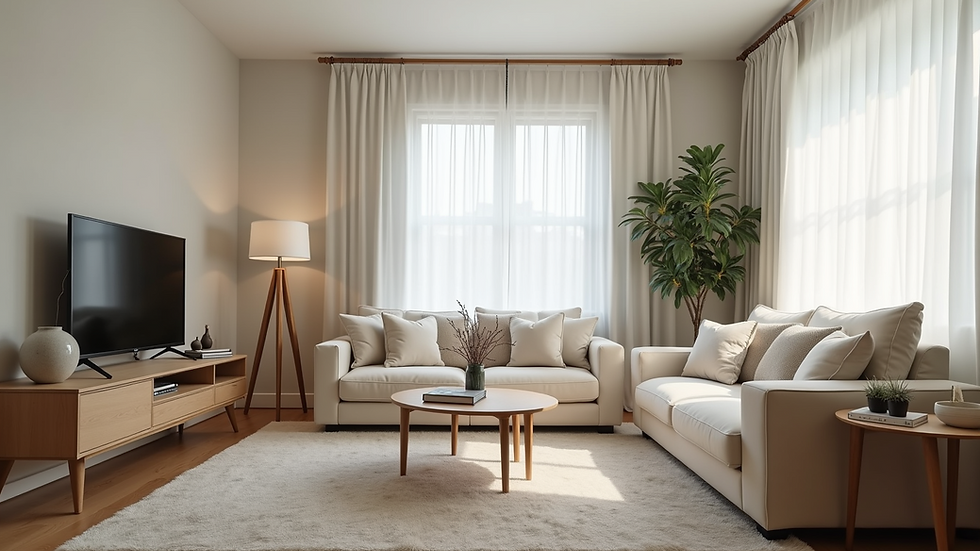
Living Room
Less really is more here.
Keep what feels meaningful and supportive—and let the rest go.
Open space creates calm.
Kitchen
Clear sink and counters = clearer mind.
Only keep out what you actually use.
Everything else should support function, not crowd it.
Bedroom
This space matters more than people realize.
Simplify what’s around you—especially what you see first thing in the morning and last thing at night.
Your nervous system will thank you.
Home Office
If your workspace feels chaotic, your thoughts often will too.
Reduce visual noise.
Keep only what supports focus.
Maintaining It With Ease
This is where most people struggle—but it doesn’t have to be complicated.
Create a system that works with your organizational style
A few minutes a day goes further than occasional deep cleans
One-in, one-out helps keep things balanced
Seasonal check-ins keep your home aligned with your life
Think of it as staying in relationship with your space—not controlling it.
The Emotional Aspect of Decluttering
Letting go of things isn’t always easy.
Not because you need the item—but because of what it represents.
Memories. Identity. “Just in case.”
So instead of forcing yourself—try this:
Acknowledge the attachment
Thank the item for what it represented
Let yourself keep the memory without keeping the object
You’re not losing anything meaningful.
You’re making space for what’s currently true.
Final Thoughts
Decluttering isn’t about having a perfectly organized home.
It’s about creating a space that feels lighter… calmer… more supportive.
A space where you can actually live your life—not manage your stuff.
And the smallest shifts?
They matter more than you think.
Because every item you release…Every surface you clear…Every decision you make with intention…Changes how your home feels.
And when your home feels different—
So do you.


Comments